Friday, 13 May 2016

Top 10 Horror Films: 50's


In my last post I gave my list of my favourite horror films of the 20's, 30's and 40's, cinema's golden age. We saw white zombie's, cat people and Universal Studio's long line of successful horror flicks, but now it's time to move into the next generation, the 1950's. This was the atomic age of horror cinema, gothic horror began to die out to make way for a new age of creatures from space and genetic mutations, an era full of rubber monsters and UFO's on strings. However it was an important age, it saw science fiction gain immense popularity, it saw colour cinema become more widespread and most importantly, it saw the birth of Hammer horror. So here we go, my pick for the top 10 horror films of the 1950's, beware of spoilers.

10. The Curse of Frankenstein (1957)


Universal Studio's dominated horror cinema in the 30's and 40's with their long chain of successful horror flicks, however by the 1950's it seemed their time had came to an end and with it came the end of gothic horror cinema. That was until 1957 when Hammer Film Productions, a British company, released their first colour horror film The Curse of Frankenstein. The film was a retelling of Mary Shelley's classic tale about a scientist who brings the dead back to life, this time it saw budding horror icons Peter Cushing and Christopher Lee as Victor Frankenstein and his creature respectively. It was not a mere remake of the Universal film however, the tone of the film and the characters were immensely different. First of all, the sets were less exaggerated and although they still had that gothic vibe, they were much more grounded in reality. Secondly, the character of Dr. Frankenstein was much more sinister in this incarnation, he is cunning and manipulative, using his unstable creature to carry out violent acts for him. Lee's creature, while much less human than Karloff's, still retains this sense of innocence and sympathy that makes him less villainous than he appears. The film marked the beginning of a new, darker age of gothic horror with more blood and sensuality and is extremely important for beginning Hammer's long line of successful horror films.

9. Plan 9 From Outer Space (1959)


Now I'm not saying this is a good film, in fact it is often considered one of the worst films ever and its director Ed Wood is never usually held in better regard, however it is a film that has to be seen to be believed. First of all the plot is ludicrous, it's a convoluted story about aliens who wish to take over mankind by resurrecting their dead to do their bidding, sounds pretty standard but that's until you witness the woeful acting and dialogue. The cast includes the likes of Tor Johnson as the zombified Inspector Clay and mistress of macabre Vampira as a, well, a very Vampira-esque character, their exaggerated performances as the undead have become iconic since for all the wrong reasons. Horror legend and friend of Wood's Bela Lugosi also pops up, sort of. Lugosi died before the film was even in production, however Wood used footage of the actor from various abandoned project and used them along with a different actor who hides behind his cloak for all his scenes to give the illusion that he appeared in the film. So why is such a bizarrely terrible film on this list you ask? Sheer entertainment. Nothing is more entertaining than an unintentionally hilarious film and Plan 9 is one of the first of that kind, it was intended to be just like the other atom age horrors of the time but instead became a joke of sorts. It's corny, full of bad writing and just downright outlandish, but that's what makes it so damn fun to watch.


8. The Blob (1958)


I actually only watched this in full for the first time a little while ago, I had seen bits and pieces over time but recently I finally watched it in all of its glory and oh boy was I glad I did. The film is about a small American town that comes under attack from a blob of space goo that consumes everything in its path causing it to grow in the process. When you mention 1950's horror films, The Blob is the type of film that first comes to mind, from the clothes to the cars to the catchy theme (which you can listen to here), this film really embodies everything about 50's culture. It also saw Steve McQueen in his debut lead role as a character called Steve, your all-American teenage boy who is one of the only people aware of the blobs existence and is determined to stop it. Although watching a giant blob of space jelly is a bit silly by today's standards it only makes it more entertaining to watch people run and scream from it. The acting in this film is far from amateur, McQueen's performance in particular is a strong one and watching him race across the town trying to warn his fellow townsfolk about the impending terror is an exhilarating experience. The Blob is a true classic that really captures the style of its time, it is the embodiment of 50's sci-fi and has gone on to inspire countless parodies and imitations in the future. It did to science fiction and horror what Frankenstein did almost 30 years prior and his highly influential to the genre.

7. Creature From the Black Lagoon (1954)


Universal Studios' line of successful horrors were coming to an end by the 1950's, but they still had a few tricks up their sleeve and Creature From the Black Lagoon is perhaps their most well known one. Departing from gothic horror and keeping with the 50's trend of mutant monsters, the film follows a team of scientists and their expedition to the Amazon in order to find a missing link between land and sea creatures. Above all else the film gave us Universal studio's last great horror icon, the Gill Man, a creature that was half man half fish and who terrorised the unsuspecting scientists. The days of Dracula and the Wolf Man were gone and the time of the Gill Man was here, although he was rubbery in appearance he was still as formidable as his fellow horror chums at Universal and even managed to spawn himself two more sequels. However, it was this original one that has become most iconic, from its beautiful underwater sequences to the creature itself, it marked a new era for Universal. However it was an era that was short lived, Universal horror films slowly began to decline in popularity and with less and less films released each year it seemed that by the end of the 50's their time had come to and end. The Gill Man was the last of the great Universal horror icons and left behind himself a legacy worthy of his predecessors.

6. Tarantula (1955)


Another one of Universals last great horror films, Tarantula was a film that followed a giant tarantula that terrorised a small town after escaping from its desert laboratory. I saw this film in my grandparents house when I was about 9 years old and being afraid of spiders I was a bit uneasy watching a giant tarantula roam through the desert, uneasy yet entertained. To me the film was everything that the atomic age was about, humans tampering with nature and facing the consequences of it, in this case scientists attempt to create a sustainable food source that when given to animals caused them to either die or grown to immense sizes. You can guess what happened to the tarantula. It is suspenseful, it is unnerving for arachnophobes, but above all it is a cautionary tale, don't mess with mother nature basically. The baddie of this film at the end of it all is not the giant spider, it is the villainous Dr. Deemer (Leo G. Carroll) who tampered with the creature in the first place. Although Tarantula is the embodiment of atom age horror, it is also much more than that. It is a film with a message, a message regarding humans tampering with nature and the horrific consequences, a message that still evidently has not been received.

5. Invasion of the Body Snatchers (1956)


The 50's saw a variety of different creatures in horror cinema, some had bulbous heads while others had numerous eyes or limbs. The pod people from Invasion of the Body Snatchers however had none of this, instead they looked and sounded just like us which was a huge advantage in their quest for world domination. The film follows Dr. Miles Bennell (Kevin McCarthy) who returns to his home town of Santa Mira only to encounter a number of people who appear to be suffering with a form of hysteria, however their delusions soon prove to be all to real. It is a very suspenseful film for its time, the idea of evil creatures from another world living among us is highly unsettling and watching Dr. Bennell's paranoia increase throughout the film makes it all the more intense. There is one particular scene in which Miles and fellow survivor Becky (Dana Wynter) flee from the pursuing pod people and to this day it is still a nailbiting experience. As it was made during the cold war, many believe that this film is a metaphor for the red scare in America, the idea that communist spies were living in American suburbia. Reasons for this belief are obvious when watching the film but whether the metaphor was intentional is up for debate. Invasion of the Body Snatchers is without a doubt one of the most iconic sci-fi/horror's from the 1950's and it is truly deservant of this status as it is a thrilling experience of intensity from start to finish.

4. The Fly (1958)


Many of you are probably more familiar with the more famous remake by director David Cronenberg, however before that grizzly body horror there came this classic sci-fi romp. Told in flashback format, the film tells the story of a scientist Andre Delambre (David Hedison) who experiments in teleportation, while testing out a new device a fly makes its way into it with him causing him to have the head and arm of a fly. The actual fly creature is rather comedic by today's standards from its exaggerated appearance to its twitchy movements, however the special effects were way better than a lot of similar creature features at the time. Horror legend Vincent Price also pops up in a supporting role playing Andre's brother Francois. It is a horror film with heart, we sympathise with Delambre's wife Helene (Patricia Owens) as she desperately tries to reverse her husbands transformation before he loses all of his humanity. However, the real shock comes after the films climax when we find out the other effects of the experiment, lets just say things don't end too well for our dear protagonist. It is a highly entertaining film with brilliant acting and, for its time, fantastic effects and although it may not be as popular as the remake it still excels in its own respect.

3. House on Haunted Hill (1959)


I mentioned Vincent Price making an appearance in The Fly and that's another thing that I love about horror cinema in the 1950's, it saw the actor come to prominence in the horror scene, beginning a flourishing career that lasted right up until his death in 1993. One of Prices greatest performances was in William Castles 1959 horror film House on Haunted Hill where he played a eccentric millionaire who offered $10,000 to anybody who could survive a night in a supposedly haunted house. What follows is a tale of terror and deception that tests the guests of the house on haunted hill. There is a very Scooby Doo vibe to this film from its setting to its twist ending, it is full of unexpected twists and turns with Prices character (literally) pulling the strings throughout. While being visually eerie, the film also has this dark sense of humour brought about by the clever writing and Prices performance, it is very reminiscent of a James Whale film. One of my favourite images in the film is that of Prices character using the dead body of his wife's lover to scare her to death, it is done in such a comedic way that we forget the brutality of it all. House on Haunted Hill is a cleverly woven tale of terror that poses the question, are ghosts real?

2. Dracula (1958)


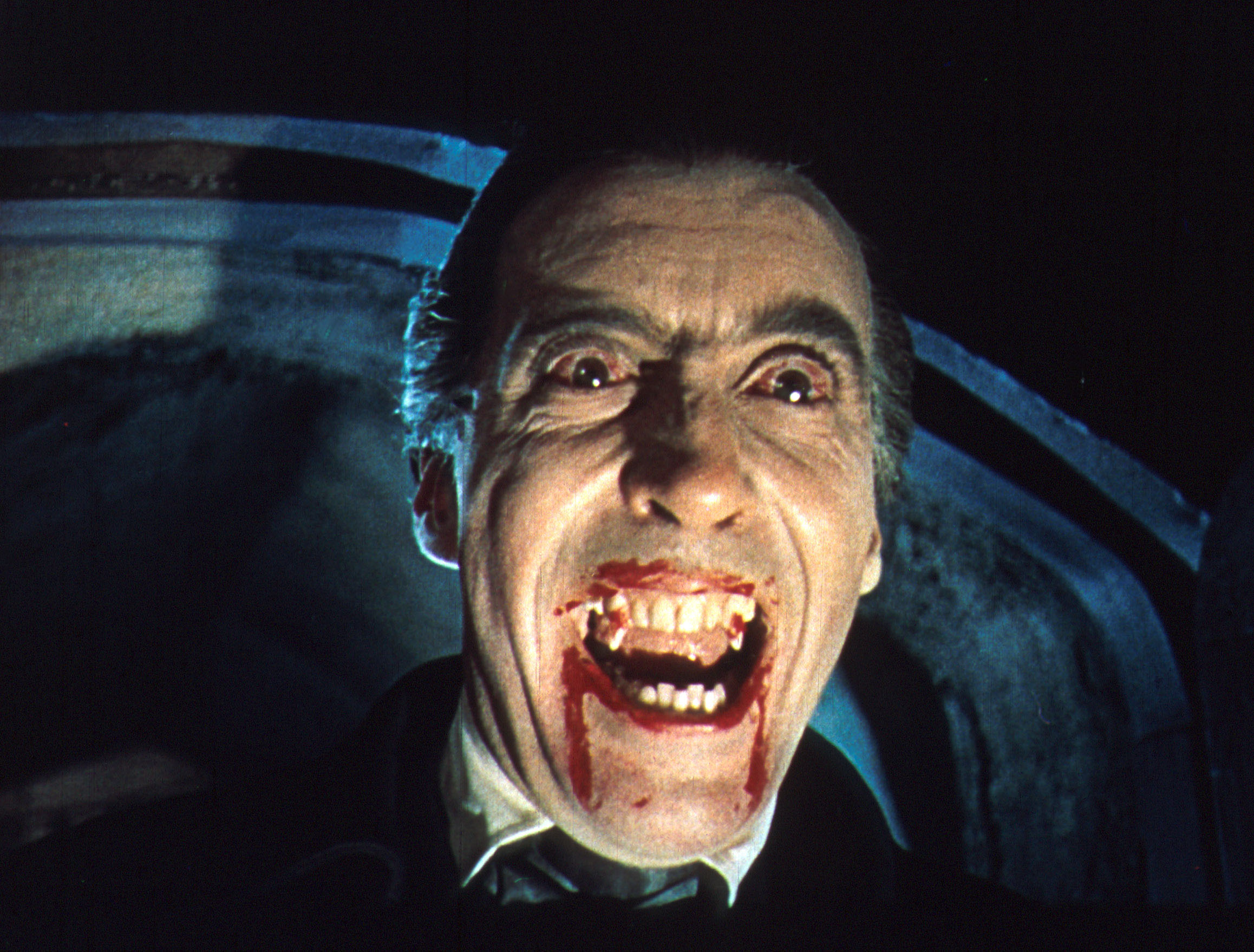
As I mentioned earlier, the latter part of the 1950's saw the emergence of Hammer horror films, and none of these are as iconic as their first adaptation of Bram Stoker's Dracula. This time Christopher Lee dons the cape and fangs to portray the iconic vampire while Peter Cushing acts as a worthy adversary in the role of the skilled vampire hunter Abraham Van Helsing. Dracula was back in full colour which meant for much more blood than previous films, and Hammer certainly made excellent use of this. Lee's performance as Dracula has since become iconic, not attempting to mimic that of Bela Lugosi but instead bringing out the more animalistic side of the Count, introducing his now signature hiss. It is not a mere imitation of Universals iconic Dracula, it is its own film with its own sinister style and unique take on the count, it is the film that popularised vampires again. Not only was it the first in a series of new Dracula films starring Lee but also inspired numerous other vampire films that took inspiration from the likes of the novel Carmilla. Much like Universal had done in 1931, Hammer had popularised gothic horror again for a new audience and they continued to produce similar films in the years that followed.

1. House of Wax (1953)


My personal favourite horror film of the 1950's however, it House of Wax. It does not involve any monsters from space or genetically mutated animals, instead it follows the insane Henry Jarrod (Vincent Price) and the dark secret behind his mysteriously realistic sculptures in his wax museum. The film is in fact a remake of an earlier film called Mystery of the Wax Museum which makes that awful Paris Hilton film a re-remake of sorts, I suppose that would make this my favourite remake of all time. One reason why I love this so much is because it was one of Prices first roles as a horror villain, in Henry Jarrod, Price had finally found his calling. Many people view this film as a gimmick film as it was released in 3D, something that is evident at certain points throughout, but it is not just a mere gimmick. House of Wax is a dark masterpiece, from its tragic villain to the shocking secrets that lie beneath his museum, the film is a thrill ride of terror that has a profound emotional depth. It is captivating both in its story and its acting and the shocking reveal at the end is one that will stick with viewers for years. It's true what they say, they sure don't make 'em like this anymore.

So that's it for this installment, I hope you liked the list and if you've got any favourite horror films from the 1950's be sure to let me know in the comments. Next time I'll be looking at the 1960's, a decade that saw a lot of Edgar Allan Poe adaptations, the evolution of the zombie movie and a certain shower scene, so stay tuned!


Tuesday, 10 May 2016

Top 10 Horror Films: 20's, 30's & 40's


Hello friends, it's been a while since I've posted anything here mainly due to excessive college work but I'm back now and what better way to make a return than to discuss one of the most important era's in cinema, the golden age. Over the next while I will be doing a series of posts on my top 10 horror films from specific era's that I enjoy or that I feel really defined their era, after this post I will be doing them by decade but I thought I'd begin by incorporating the 20's, 30's and 40's into one post. Those three decades were essentially the genesis of horror cinema, they saw the rise and (temporary) fall of gothic horror cinema and the birth of some of the genres most iconic figures. So here are 10 of my favourite horror films from that era, enjoy!

10. Cat People (1942)


A film that lived by the term 'less is more', Cat People was a different kind of horror film for its time. While most horrors focused on creating a terrifyingly memorable antagonist, Cat People's creature is never actually seen, instead the cat creature is more implied and brought to life through the use of sound and shadow. The film follows Serbian fashion designer Irena Dubrovna (Simone Simon) as she struggles with her strange curse that turns her into a cat person when she becomes aroused. The film focuses heavily on suspense as seen from the infamous pool scene, it also introduced a technique known as the Lewton Bus in which a build up of tension is broken by a moment of startlement by something that isn't threatening. In this case, the audience expects Irena to turn into a panther and attack her unsuspecting victim, instead the tension is broken by the sound of a bus pulling up. The technique was named after the films producer Val Lewton. It was a different film for its time but one that made excellent use of suspense to create an atmosphere of dread in its more unnerving scenes.

9. The Mummy (1932)


Another film that relied more on atmosphere than thrills, The Mummy was one of Universal's early monster movies and saw rising horror legend Boris Karloff in the titular role. Karloff plays Imhotep, an Egyptian high priest who was mummified and later resurrected after his tomb is discovered by archaeologists, after this he sets out to bring his dead lover back to life. If that sounds familiar its probably because you've seen the films remake with Brendan Fraiser and its subsequent sequels, but this is where it all began and watching Karloff's captivating performance as Imhotep to me is more entertaining than any blockbuster action sequence. Aside from being a tense horror film it is also a love story about a dead man looking for his dead girl and that is something we can all relate to in some ways. Often overshadowed by other Universal horror flicks such as Dracula and Frankenstein, this film is just as good and left behind a legacy that inspired countless re-imaginings, parodies and remakes in the years that followed.

8. White Zombie (1932)


Before George Romero changed zombie movies forever, classic zombie flicks generally involved more voodoo and less brains and White Zombie is one of the best. It is a twisted tale of unrequited love that sees a man enlist the help of voodoo priest Murder Legendre (Bela Lugosi) to help him win the heart of a woman named Madeleine (Madge Bellamy). One of the main reasons why I love White Zombie is Bela Lugosi, the Hungarian actor always has sense about his performance that is almost bewitching and it is quite evident in this film. Having said that, the acting is a bit hammy but that's the beauty of films like White Zombie, they're over the top, they're melodramatic, but it works! What makes it so memorable aside from the acting is just how bizarre the whole thing is, zombies working in a sugarcane mill under the control of a voodoo priest who looks suspiciously like Dracula before they all slowly walk off a cliff to their death (well, second death I guess). It's totally bizarre and hammy but in the best way possible.

7. The Wolf Man (1941)


Lon Chaney was already a well established name in horror cinema, the renowned makeup artist had become iconic thanks to his roles in films such as The Phantom of the Opera. However it was his son, Lon Chaney Jr. who took the spotlight for this Universal monster movie. Chaney plays Larry Talbot, a man who falls victim to a terrible curse that forces him to transform into a terrifying wolf man when the sun goes down. Chaney is flawless as both man and beast in this film, being cool and calm as Larry Talbot while going full animal for the eponymous monster, he would go on to play the role numerous times after and is known for being very fond of the character. Like the aforementioned Cat People, this is a film that focuses on the struggle between humanity and the beast inside, Talbot does not want to hurt people but the transformation is something that he cannot control. There's this internal conflict going on amidst the conflict between Talbot and those around him and it makes for a really powerful story about mans struggle between good and evil.

6. Frankenstein (1931)


One of the earliest horror films from Universal studios and definitely the most iconic, Frankenstein was a loose adaptation of Mary Shelley's novel of the same name and saw Boris Karloff take on the role of the creature brought back from the dead by the titular doctor (Colin Clive). Karloff's portrayal differs from the character in the book, he is not as educated for one but also he is much more sympathetic. There is a child like essence about Karloff's monster, he is curious and wants to fit in but is constantly rejected by those around him and therefore turns against them. In a way he is very much human despite his inhuman qualities. The film is also stylistically phenomenal, its gothic production design has since become iconic from the looming castles to the massive laboratory while Jack Pierce's monster makeup has become a face we all know at this stage and one that is heavily associated with Frankenstein's monster. This is without a doubt one of the most influential horror films of its own time and of all time. 

5. Nosferatu (1922)


Before horror films became big in America they were making quite the impact in inter-war Germany. Cinema became a big deal in the Weimar Republic, particularly expressionist films, and Nosferatu is one of the most iconic. It is essentially an adaptation of Bram Stoker's Dracula just with the character's names changed and the location moved to Germany, however the film has become very much its own thing. I'll have to admit it took me several attempts to watch this in full but I eventually learned to appreciate it for its haunting atmosphere and unsettling performance by Max Shreck as the terrifying Count Orlok. Like many expressionist films there is this atmosphere that is almost dreamlike, or in this case nightmare-like and combined with Shreck's appearance this is a truly spine-tingling piece of cinema. In a way it pioneered the horror craze that would dominate the decades that followed.

4. Freaks (1932)


And now a film way ahead of its time, Freaks, a film about sideshow performers who come into conflict with the scheming trapeze artist Cleopatra (Olga Baclanova) who wants the inheritance of one of their members. Upon its release, Freaks was incredibly controversial mainly due to the fact that the cast was mainly composed of real sideshow performers with real irregularities and it ultimately led to the end of director Tod Browning's career several years later. It was also controversial due to the disturbing imagery in the films shocking climax where it is revealed what the performers did to the unfortunate Cleopatra. Audiences were shocked at the time but it has since become a classic that is considered to be ahead of its time both thematically and visually. I really like this film as it does not portray the titular 'freaks' as monsters but merely as misunderstood people who have found their place in society among each other. Above all, this is a film about acceptance.

3. Dracula (1931)


The film that began the long chain of Universal horror films that dominated cinema during the 30's and 40's, Dracula not only set the standard for horror cinema at the time but also characterised the iconic vampire from Bram Stoker's novel. Bela Lugosi's performance as the titular Count has gone down in history and has influenced countless other adaptations and different vampire films. Although it is more an adaptation of the stage play it still retains the spirit of the novel and certainly excelled in presenting Count Dracula on the big screen. There is a chilling atmosphere throughout from the gloomy corridors of Dracula's castle to the crypts of Carfax Abby, it may seem a bit dated by today's standards however there is an undeniable air of suspense from start to finish that is only enhanced by Lugosi's charming performance as Dracula. It is a true gothic masterpiece and is essentially what brought about the popularity of horror cinema in the golden age.

2. Bride of Frankenstein (1935)


Perhaps the first sequel to be considered better than its predecessor, Bride of Frankenstein continues the story from the first Frankenstein and follows the monster as he continues his quest for acceptance. Meanwhile Dr. Frankenstein is reunited with his former friend and mentor Dr. Pretorius (Ernest Thesiger) who plans on creating a bride for the creature along with a whole race of undead creatures. The film allows more development for Karloff's monster who longs for companionship and learns how to speak, it is almost heartbreaking watching him interact with the fearful villagers. It is often considered to be one of the first gay horror films not only because of director James Whale's homosexuality but also because of the overly flamboyant character of Pretorius. The titular bride (Elsa Lanchester) doesn't have much screentime but her appearance is a memorable one, the scene between her and Karloff during the films climax certainly pulls on the heart strings. Who knew a film about bringing dead bodies back to life could be so damn emotional.

1. The Cabinet of Dr. Caligari (1920)


It would be a crime not to give the top spot to this film, it is after all one of the first ever horror films. The Cabinet of Dr. Caligari is a milestone in the history of cinema, it is an expressionist masterpiece that maintains an eerie atmosphere from the start until its twisted climax. It follows a strange string of murders that took place after the arrival of the mysterious Dr. Caligari (Werner Krauss), a travelling hypnotist accompanied by the mysterious somnambulist Caesare (Conrad Veidt). Visually this is stunning, the twisted and distorted setpieces enhance that nightmarish atmosphere to give a whole different cinematic experience. Watching the menacing Caesare move through the twisted dark city is very unsettling, the film is almost like being stuck in a nightmare that you never want to wake up from. The film is also known for being the first film with a twist ending, but if you want to see that you'll have to watch it. Dark, chilling yet extremely captivating, The Cabinet of Dr. Caligari is a must see film for anybody interested in not only horror but in cinema as a whole too.

So that's this installment finished, next time I'll be looking at my top 10 horror films of the 1950's that will include space monsters and the birth of Hammer horror so stay tuned for that. I hope you liked the list and if you have any other horror films from that era that you enjoy then let me know in the comments, until next time.  

Tuesday, 26 April 2016

Top 10 Breaking Bad Moments


Three years ago one of the greatest, most well-written television shows wrapped up for good as AMC's Breaking Bad came to an end. The show followed the journey of former chemistry teacher Walter White (Bryan Cranston) from humble family man to ruthless drug lord when he turns to cooking meth to fund his cancer treatment. The show is undoubtedly one of the most iconic pieces of television of the decade and its fanbase has only grown vaster since it came to an end three years ago, it was clever, it was violent and it overflowed with suspense. The show contained numerous memorable moments that left audiences on the edges of their seats with mouths wide open in awe, the following list is my choices for my ten favourite moments of the show. Needless to say if you haven't finished the show yet there are spoilers ahead.

10. Say My Name


Like many great shows, Breaking Bad was filled with memorable quotes that have become plastered over merch everywhere since, one of the most iconic of these being 'say my name'. In season five Walt had made his way to the top after taking out former crime boss Gus Fring (Giancarlo Esposito), now nothing could stand in his way. When his accomplice Mike (Jonathan Banks) decides to retire, Walt looks for somebody to take over his role which he finds in the form of a group of dealers led by a man called Declan (Lois Ferreira). Once the dealers agree to take up Mike's end, Walt begins to taunt them by letting them know who's boss, requesting that Declan say his name. When the nervous dealer finally acknowledges Walt as Heisenberg, he responds by saying 'you're goddamn right'. I think this is a brilliant scene, Walt is finally at the top and unopposed so he decides to assert his dominance over the group of dealers. It is a prime example of how really nasty Walt gets with his growing power and one of his most badass moments on the show. You can watch that moment here.

9. Car Park Ambush


Throughout the third season of Breaking Bad a pair of formidable twins (Daniel and Luis Moncada) made their way to Albuquerque with one goal, to kill Walter White. They were seeking vengeance on Walt as they believed that his betrayal of their cousin Tuco Salamanca (Raymond Cruz) led to his death, they almost had their revenge and everything until they were stopped by Gus Fring. Fring knew that Walt was a valuable asset and instead told the twins that Tuco's killer was in fact Walt's brother-in-law Hank, this prompted them to go after him instead. What followed was an extremely intense scene where the twins attempted to kill Hank in a car park, luckily Hank managed to crush one with his car first before shooting the other in the head, narrowly escaping his axe. It is an incredibly suspenseful scene as we watch Hank fight for survival against these two terminator-esque foes who are seemingly unstoppable and when Hank finally delivers that final shot a long sigh of relief was breathed. Truly intense stuff which you can witness here.

8. Jane's Death


Season two saw the introduction of Jane Margolis (Krysten Ritter), the landlord turned love interest of Walt's partner in crime Jesse Pinkman (Aaron Paul). Jane was fiery and strong-willed and her and Jesse got on like a house on fire, however for Walt she proved quite the problem. Not only did she get Jesse hooked on heroin which resulted in Walt almost missing a deal with Gus Fring but she even went as far as blackmailing him so that he would give Jesse his share of the deal. Walt heads to Jesse and Jane's apartment to reconcile however when he moves her to shake Jesse awake she begins to overdose and choke on her own vomit while Walt simply stands and watches it happen. It is a truly harrowing scene as we see Walt's manipulative and cunning nature surfacing, it also acts as a defining moment of season two as it sparked off several other events such as Mike's introduction and the infamous plane crash. What makes it most distressing however, is the fact that Jesse was completely unaware of Walt's presence at the time and remained unaware right up until season five. You can watch that scene here.

7. I Am The Danger


Another brilliant Walter White quote this time directed at his nagging wife Skyler (Anna Gunn). There was always tension between Walt and Skyler, especially when he finally began to crawl from beneath her thumb and gain a new sense of independence. In the sixth episode of season four Skyler once again tries to push Walt to do what she believes to be the right thing, going to the police, which is something Walt clearly disagrees with. She believes that her family is in danger and that going to the police would be the best option, however Walt soon snaps and shoots down her statements by assuring her that they are not in danger because he is the danger. He goes on to say that when someone opens their door and gets shot that he is the one who knocks, these statements leave Skyler speechless for once as Walt has finally managed to assert his dominance. It is a great scene for Walt, he takes a stand against his domineering wife and assures her that he is the biggest and most ruthless power in the meth industry, something that leaves Skyler with a lot to think about. You can see that iconic scene here.

6. Machine Gun-Car


The final episode of Breaking Bad was one of the best possible ways to finish up the show, it saw Walt tying up all of his loose ends before exacting revenge on vicious neo-Nazi Jack (Michael Bowen) in preparation for his inevitable death. In order to eliminate Jack and his men, Walt fitted a machine gun to his car which he then turned on via remote control during negotiations with them. What resulted was a catharsis of violence and gunshot as the gang of neo-Nazis get pumped full of lead relentlessly, Walt then shoots Jack with his own gun and frees Jesse who had been kept by the gang as a prisoner. It was an explosive and satisfying final confrontation for Walt which ended with himself and Jesse making amends before parting ways for good. It was essentially Walt tying up his final loose ends before embracing his impending death, an action packed sequence that you can watch again and again here.

5. Hank's Death


As a DEA agent, Hank Schrader found himself clashing with Heisenberg quite a lot, unaware that the mysterious cook was in fact Walt. After eventually finding out and apprehending Walt in the desert it looked as though Hank had finally closed that case for good, that was until Jack and his gang of neo-Nazi's arrived on the scene. In the thirteenth episode of the fifth season the final scene sees a gunfight breaking out between Hank and his partner Gomez (Steven Michael Quezada) and Jack's gang, one that's aftermath is shown in the next episode. With Gomez dead and Hank severely injured things did not look too good for him, although Walt pleaded with Jack to spare Hank's life, the DEA agent knew that he could not escape this one. In one of the shows most powerful scenes, Hank accepts his fate and refuses to beg for mercy knowing that Jack had already made up his mind, something which he tells Walt before abruptly being shot. It was a truly harrowing scene as Hank was such a major character, it leaves a heavy emotional impact on the characters and audience alike. You can watch that harrowing scene here.

4. Train Heist


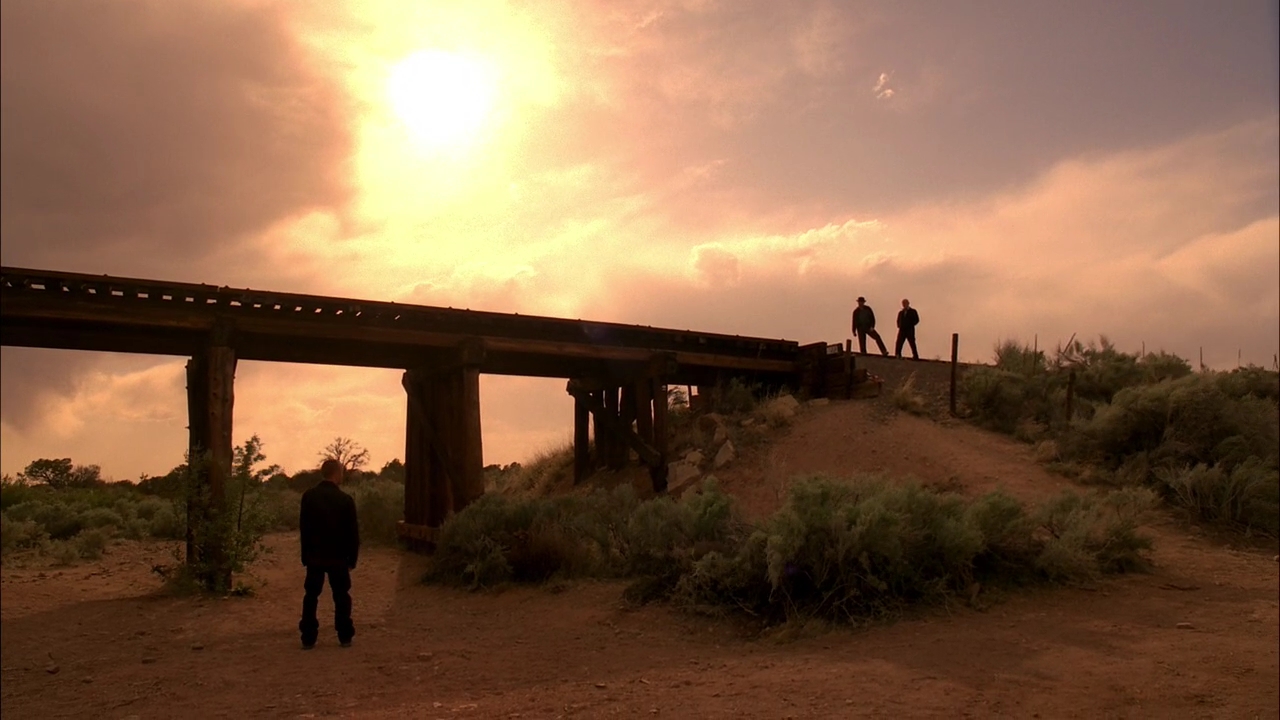
Not exactly a scene, moreso the guts of an entire episode, the train heist takes place during season five and sees Walt, Jesse and Todd (Jesse Plemons) attempting to rob a train of its methylamine. It is a nailbiting sequence that is so clever and elaborate that it left me sweating with anticipation, not only did the trio have to drain the methylamine from the train but also simultaneously pump it full of water to keep its weight consistent. Things begin well until the train begins to move earlier than expected which placed the whole operation in jeopardy. Despite being told to stop the operation Walt pushes on, risking the lives of both Jesse and Todd, however the trio ultimately get what they came for before the train begins moving again. A truly remarkable sequence like something straight out of a film, it is not only one of season five's most well-written moments but also one of Walt's biggest risks as he puts his partners' lives on the line for the sake of their mission. You can view the fantastic train heist here.

3. Gus Kills the Cartel


Speaking of elaborate moments, the following, for me was one of the highlights of the shows fourth season and sees crime boss Gustavo Fring taking his revenge on the Mexican Cartel. It was previously shown that Gus held resentment towards the Cartel's leader Don Eladio (Steven Bauer) after he killed his business partner years beforehand. Fring arrives at Eladio's villa with Jesse and Mike and for a while it looks as though he has forgiven Eladio, presenting him with a bottle of tequila from which he and his capos proceed to drink along with Gus. However it is soon revealed that the tequila was poisoned as Gus forces himself to vomit it back up, all of the capos and Don Eladio soon succumb to the poison and die thus granting Gus his revenge. Not only was this scene a clever one but it was just so cool, seeing Gus being as calm and collected as ever despite the circumstances really made his character stand out among the rest and it is one of his finest moments in the show. Although he was a bad guy, it was satisfying seeing Gus finally get justice for his partner killed by the Cartel. For me it was one of the coolest scenes on the show and you can watch it in all its glory here.

2. The Prison Massacre


Taking place in season five's midseason finale, the prison massacre sequence is one of the most brutal moments of the show and definitely one of the most memorable ones. After Mike's death, Walt orchestrates a plan to assassinate his nine henchmen and their lawyer simultaneously in three different prisons in the space of two minutes. An ambitious scheme, Walt enlisted the help of Jack who had contacts in the prisons who could carry out the assassinations in the given time and as the clock begins to tick the body count rises in a montage of ultraviolence. There is stabbing, throwing and even burning alive as the ten lives are slowly whittled down to zero and as the chaos ensues in the prisons Walt simply waits in the comfort of his own home. This explosion of violence and mayhem was truly one of Walt's most ruthless schemes and he organised it all without having to kill anybody himself, the juxtaposition of the violent imagery with the music of Nat King Cole playing over it also worked nicely. You can watch the fantastic prison massacre here.

1. Hank Finds Out


My favourite moment from Breaking Bad is not some clever operation or a violent showdown, in fact it has no action at all. However, this scene acts as one of the shows most pivotal turning points and as it was placed at the end of the midseason finale the impact was only enhanced. Earlier in the show Hank found a lead to the identity of Heisenberg in the notes of Walt's former partner Gale (David Costabile) where the initials 'W.W.'were written. He jokingly accused Walt of being W.W. which they both proceeded to laugh about. However, later in season five while Hank is in Walt's bathroom he flicks through the pages of a Walt Whitman book given to Walt as a present from Gale, it is then when he finds Gale's message inside referring to Walt as W.W. After seeing this, Hank finally puts two and two together and realises that Heisenberg had been hiding under his nose the whole time. It is one of the greatest cliffhangers in television history and marked a pivotal turning point in both the show and the relationship between Hank and Walt. Hanks expression of realisation is one that will remain with audiences forever. You can watch that scene here.

So those were just my top ten favourite moments from the show, there are tons of other brilliant scenes in Breaking Bad but these were my personal favourites. If you have a favourite moment from the show let me know in the comments, other than that thank you for reading!


Tuesday, 19 April 2016

Thoughts on the Universal monster movie reboots


At the beginning of the 1930's, Universal studios helped to bring horror films into the mainstream. Their early talkie horror films included the likes of Dracula and Frankenstein and have went on to influence countless later films and other forms of media. These early monster movies are extremely significant in the history of cinema as, in some ways, they are what set the standard for horror cinema both thematically and stylistically, they also introduced some true legends of the genre such as Boris Karloff and Lon Chaney Jr. Recently it has been announced that Universal plan to reboot these classic films in a Marvel style shared cinematic universe, which sounds great on paper. However, whether this is a success or not all depends on the execution and how the final productions turn out. Production has already begun on The Mummy with Kingsman actor Sofia Boutella attached as the eponymous mummy and Tom Cruise as the protagonist while Johnny Depp seems like the top contender to play the invisible man in his own film, but what about the rest? Who will be the next person to don Dracula's cape or transform into the Wolfman when the moon is full? These are my thougts.

Dracula


Universal already gave us a Dracula reboot of sorts in Dracula Untold which was a dreadful film in both its portrayal of Dracula and its historical accuracy. Although Luke Evans is a good actor, the role was written to be a protagonist and I think if Dracula is to be rebooted the character needs to be as sinister as ever. First of all I think the perfect director for a Dracula reboot would be Robert Eggers, if he could bring that suspenseful atmosphere from The Witch to a film about Dracula then I think it could work really well. Secondly, I think Mads Mikkelsen would be fantastic as the titular vampire. If Hannibal has thought us anything it is that Mikkelsen has this very strong presence onscreen, he played a character who held a unique blend of sophistication and animalistic violence which is something that he could bring to Count Dracula that could work really well. As for his arch nemesis Abraham Van Helsing, I think Christoph Waltz would be a very interesting choice. The Austrian actor has given many memorable performances throughout his career and seeing him in the role of the devout vampire hunter facing off against Mikkelsens Dracula would be a sight to behold. Other casting choices that I would like to see in a Dracula reboot are Domhnall Gleeson as Johnathan Harker, Janet Montgomery as his fiance Mina Murray and Iwan Rheon as Reinfield. There is still an extensive ensemble cast to be filled depending on whether the film follows the novel or stage production like the 1931 version, or who knows, Universal may take an entirely different route.

Frankenstein


One director who has previously expressed interest in making a Frankenstein adaptation is Guillermo Del Toro and personally, I can think of no better man for the job. Del Toro has a very unique visual style that I think would suit a Frankenstein film down to a T, along with this the Mexican director has a penchant for designing memorable and grotesque monsters which is something that he could incorporate into the creature design. As for the creature himself, it would only be right that if Del Toro was directing then frequent collaborator Doug Jones would be cast in that role. Jones has appeared in almost all of Del Toro's films and is usually unrecognisable under the layers of makeup he wears, he has played the likes of Abe Sapien in Hellboy and Hellboy 2 and both the Faun and the Pale man in Pan's Labyrinth. His expressive face and memorable features make him a big contender for the role of the monster. As for Dr. Frankenstein himself I think that Benedict Cumberbatch would excel in the role, he has already played both Dr. Frankenstein and the monster in Danny Boyle's stage adaptation and his performance would undoubtedly be powerful enough to match that of Colin Clive's. David Tennant would be a great choice for the hunchbacked assistant (his performance in The Goblet of Fire is proof enough) while Game of Thrones star Natalie Dormer could play Elizabeth. 

The Wolfman


After watching his film The Hallow, I think that Corin Hardy would be the director for the job when bringing The Wolfman back to the big screen. Along with being favourable towards practical effects, he has a relatively small filmography so directing such a big film as The Wolfman could really help to further his career. As for the Wolfman himself, Lawrence Talbot, I think Tom Hardy would be perfect for the role. Hardy is known for playing characters who are wild an unhinged while maintaining a certain level of depth and that is basically what the Wolfman is, a man struggling between his humanity and the beast inside. Hardy would certainly give one of his best performances yet. As for Talbot's stern father, Sir. John, I think Charles Dance could channel some of that inner Tywin Lannister from Game of Thrones to portray that strict father figure. Jenna Coleman of Doctor Who fame would be a good choice for Talbot's love interest Gwen, she is a character who entices Talbot from the beginning and Coleman is no stranger when it comes to playing strong female characters. The film was remade about 6 years ago with Benicio Del Toro in the lead and although it was praised for its creature effects, it was criticized for being a bit boring. Perhaps if Corin Hardy were to direct this he could make is just as suspenseful and chilling as The Hallow was.

The Creature From the Black Lagoon


This is one of the few films on this list that would work well in a contemporary setting and if there was one director who could really capture the beauty of the Amazon rainforest while providing suspense and scares it is Cary Fukunaga. The director is known for his distinct visual style as seen in the likes of True Detective and Sin Nombre where he really managed to capture the beautiful settings and use them as backdrops for the thrilling stories. True Detective star Matthew McConaughey would be a great choice for the male lead Dr. Reed while Scarlett Johansson could play his collegue and love interest Dr. Kay Thompson. Other members of the expedition include fellow scientists Carl Maia and Mark Williams who could be portrayed by Javier Bardem and Idris Elba respectively. As for the creature itself I think a full CGI gill man would be a bad choice, in order to avoid the rubbery look of the original they could even use a combination of CGI and practical effects. Then of course there is the motion capture route and in that case give Andy Serkis a call. I like to think that if the film was remade it could be a Prometheus-esque horrific adventure film, something like Alien in the Amazon. It could act as an opportunity to make the gill man a more serious and menacing baddie as opposed to the original rubbery one.

The Bride of Frankenstein


Assuming it would be a sequel to Del Toro's Frankenstein it would contain the cast members in their respective roles from that film while adding a couple more. First of all the bride herself, Universal had expressed interest in Angelina Jolie directing this one and that would be an excellent decision in my opinion, she could also star as the bride if she wished as I believe she could bring a level of depth to the character, something she lacked in the original. Another important role from the original is Dr. Frankenstein's former mentor Doctor Pretorious, a camp character who was implied to be homosexual, I think openly gay actor Ian McKellen would do wonders with the role. One thing I would love to see in this film is more background for the bride, where did she come from? Who was she in life? I also would like to see her on screen more as opposed to the few minutes of screen time she had in the original. If Jolie chooses to remain behind the camera for this one then perhaps Rooney Mara could even take on the role, the bride is a character who I feel needs much more attention.

So those are my thoughts, I am curious to see if any of this does end up happening and if not, how will Universal go about these films. If Dracula Untold was in fact the first of these and the rest of the films will be similar to that then I cannot see things going well. The original monster movies are milestones in cinema, they are films that deserve a certain amount of care and respect when being rebooted and if Universal are just going to throw out any old CGI-filled fantasy film then they should be ashamed. It will be interesting to see how these films do turn out and I look forward to seeing them all, I like to think that they will be handled with care and executed well but these days it is easy to just spew out anything that will rake in profit. Only time will tell how these films turn out.

Monday, 11 April 2016

10 Most Influential Horror Films of All Time


Every once in a while there is a film, a film that stands out among the rest, a film that can have a profound impact on the viewer and even help to shape a genre. Films like these have gone down in cinematic history for being extremely influential to their genre, to fellow filmmakers and even to fans, they hold a special place in history and in the hearts of many cinemagoers. Horror is one of my favourite genres and over the years there have been countless horror films that not only influenced the genre, but cinema itself. Groundbreaking films that pushed boundaries and paved the way for films in the future. So without further ado I present to you my pick for the top 10 most influential horror films of all time, I must stress this is not a list of the scariest films ever, but horror films that helped to shape the genre over the years and that I find to be influential.

10. Scream (Wes Craven, 1996)


Wes Craven had already become an established horror filmmaker by the nineties, known for the likes of A Nightmare on Elm Street and The Hills Have Eyes Craven was a big name in horror cinema. The 80's had seen a large number of slasher films released across the decade but after the transition into the nineties the subgenre had apparently died out. Then came along Mr. Craven with his 1996 meta-horror Scream, a film which I feel brought the slasher film into the modern age. The film was a tongue in cheek look at slasher films, it almost dissected the genre by pointing out the general formula and 'rules' to slasher movies. I feel like Scream made the horror genre very self-aware, it showed that it was possible to poke fun at the conventions of horror cinema without being a full blown comedy, yes despite being a bit of a parody at heart, Scream was still pretty thrilling. It helped to revive teen slasher films for a new generation, being followed by similar films such as I Know What You Did Last Summer while also inspiring more tongue in cheek horror flicks such as Bride of Chucky. 

9. The Texas Chainsaw Massacre (Tobe Hooper, 1974)


Working with a low budget in filmmaking can either go one way or the other, one way being horribly and the other being surprisingly refreshing. The Texas Chainsaw Massacre falls into the latter category, filming on a budget of under $30,000 Tobe Hooper managed to bring us one of the most controversial and refreshing horror films of its time. The film was highly criticized for its violent and unsavory content such as cannibalism and torture, by today's standards the violence is pretty minimal but that does not make it any less shocking. The film is a heart-racing thrill ride from start to finish and its grimy aesthetic makes it all the more unnerving, Hooper showed us that even with a minimal budget one can still deliver a truly shocking film. Along with Hooper making the most of his budget, the film is a prime example of the intersection of horror and the arthouse, it is an indie masterpiece that is as beautifully shot as it is exhilarating. The film is not only influential to the horror genre but to indie filmmakers everywhere.

8. Alien (Ridley Scott, 1979)


In 1979, Ridley Scott gave us what is perhaps the most terrifying sci-fi film of all time, Alien. It took a well known formula of a crew fending off an alien creature aboard their spaceship but used heavy elements of horror to create a truly nail biting experience. The film plays on the themes of isolation and the uncertainty of space as we follow Ellen Ripley (Sigourney Weaver) as she fights for her life against the deadly Xenomorph, never had space seemed so horrifying until this film. It is known for being one of the many horror films to have a strong female lead, Weavers performance as Ripley is phenomenal and has gone on to influence countless action heroines of today. Alien is quite possibly one of the most suspenseful horror films ever and I have yet to see something that truly matches its levels of intensity (The Thing and The Witch have come extremely close), not only that but it spawned a number of sequels, spin-offs and other media making it one of the most successful horror franchises ever. Alien is what helped to incorporate sci-fi into the horror genre without being too corny or camp.

7. Dracula (Terence Fisher, 1958)


Speaking of corny and campy sci-fi, those are the types of films that began to dominate the big screens in the 1950's, the atomic age was in and the days of gothic horror seemed to be long gone. That was until Hammer's first gothic horror production, Terence Fisher's Dracula. Now don't get me wrong, for me Bela Lugosi is the definitive Count Dracula, but if it wasn't for this film and Christopher Lee's performance as the eponymous count then gothic horror films may have been dead for quite some time. The film was the first to use Dracula's now signature hiss along with giving him that terrifying, animalistic appearance that we have grown so accustomed to, along with that it was released in full colour allowing for a lot more bloodshed than previous vampire films. Terence Fishers Dracula managed to revive gothic horror cinema in a more bloodier way than ever and it set the bar for future Hammer horror films along with other films of a similar nature. 

6. Halloween (John Carpenter, 1978)


Earlier I mentioned how Scream managed to revive the slasher genre, now we come to the spark that set off the explosion of slashers in the first place. Much like The Texas Chainsaw Massacre, Halloween was a low budget production, however it managed to defy all odds and go on to be one of horror cinemas most suspenseful slasher flicks. From its iconic soundtrack by director John Carpenter to some truly tense sequences, the film had audiences hearts racing without being a big-budget blockbuster and went on to spawn a number of sequels. Above all else, Halloween is essentially the beginning of the slasher boom in the following decade, it is not the first slasher film but it is one of the most influential as after its release a wide variety of films with a similar structure and formula went into production. Halloween is truly a milestone in the history of horror.

5. Frankenstein (James Whale, 1931)


After the success of their first talkie horror production Dracula, Universal Studios quickly followed it up with an adaptation of Mary Shelley's gothic horror novel Frankenstein. What is most notable about this film is its production design, taking inspiration from German expressionist films such as The Cabinet of Dr. Caligari while putting a unique spin on it. This is what set the bar for the aesthetic of gothic horror films, the sinister looking castles, exaggerated sets and gigantic laboratories are all things that can be found in this film and have appeared in countless films since. It does take heavy inspiration from German expressionist films but it develops that into something that was fresh and new, something that really suited the tone of the story well. Plus, Frankenstein is what gave us the horror icon Boris Karloff, a man who's career in horror spans over 30 years. This was horror genesis.

4. The Exorcist (William Friedkin, 1973)


When you look at lists about the scariest films of all time The Exorcist usually lies in the top spot, personally it never really scared me but one cannot deny its profound influence on horror cinema. What is most important about this film is that it really pushed the boundaries of what can be shown in a mainstream film, it was packed to the brim with some truly shocking and gut wrenching sequences such as the headspin and the chilling spider walk. It thoroughly shocked audiences at the time and had to be heavily cut upon its release, its visuals were not the only controversial thing about The Exorcist however, its subject matter regarding religion and losing faith also met a fair amount of controversy. The film is one of the first mainstream horror films that really took a risk, one that pushed boundaries as far as it could to create something truly scary. The film is even more relevant now due to the extreme popularity of demonic possession films, each one having some nod to The Exorcist in them.

3. A Bay of Blood (Mario Bava, 1971)


For many, slasher films are very much an American thing, but their roots in Italian giallo films are undeniable and A Bay of Blood is the perfect example of this. The unseen killer taking out unsuspecting teenagers one at a time as they indulge in various types of debauchery is a formula that has become all too familiar, one that Bava used in A Bay of Blood way before slashers became so popular in America. It is often considered to be Bava's most violent films and it does contain a fair amount of blood and gore for its time, this aspect was highly influential on the American slashers of the following decade. One of the films death scenes involving the impalement of a man and a woman was even directly imitated in Friday the 13th: Part 2 10 years later. It is a bit of an obscure one compared to some of the films on this list which is a shame because A Bay of Blood (or Twitch of the Death Nerve or whatever one of its various titles you choose to call it) is without a doubt one of the biggest influences on the slasher genre, predating the likes of Halloween and The Texas Chainsaw Massacre.

2. Psycho (Alfred Hitchcock, 1960)


One important film that did predate A Bay of Blood, however and one of the first slasher films is Alfred Hitchcock's iconic film Psycho. Based on the novel by Robert Bloch, who was a good friend of horror writer H.P. Lovecraft, the film was a highly ambitious production for its time due to its shocking nature and controversial subject matter. Even by today's standards Psycho is still a shocking piece of cinema, it is a film that is not afraid to take risks and even after 56 years it has not become dated. It is immensely suspenseful, suspense being Hitchcock's forte after all, and highly unpredictable, this is a film that was way ahead of its time. A combination of Hitchcock's directorial skills and Bernard Herrmann's string-heavy score is what made this film so nail-bitingly intense, along with a brilliant performance from Anthony Perkins as Norman Bates, the film has not only inspired countless slasher films but also a variety of films from a variety of genres. Psycho is a very important film.


1. Night of the Living Dead (George A. Romero, 1968)


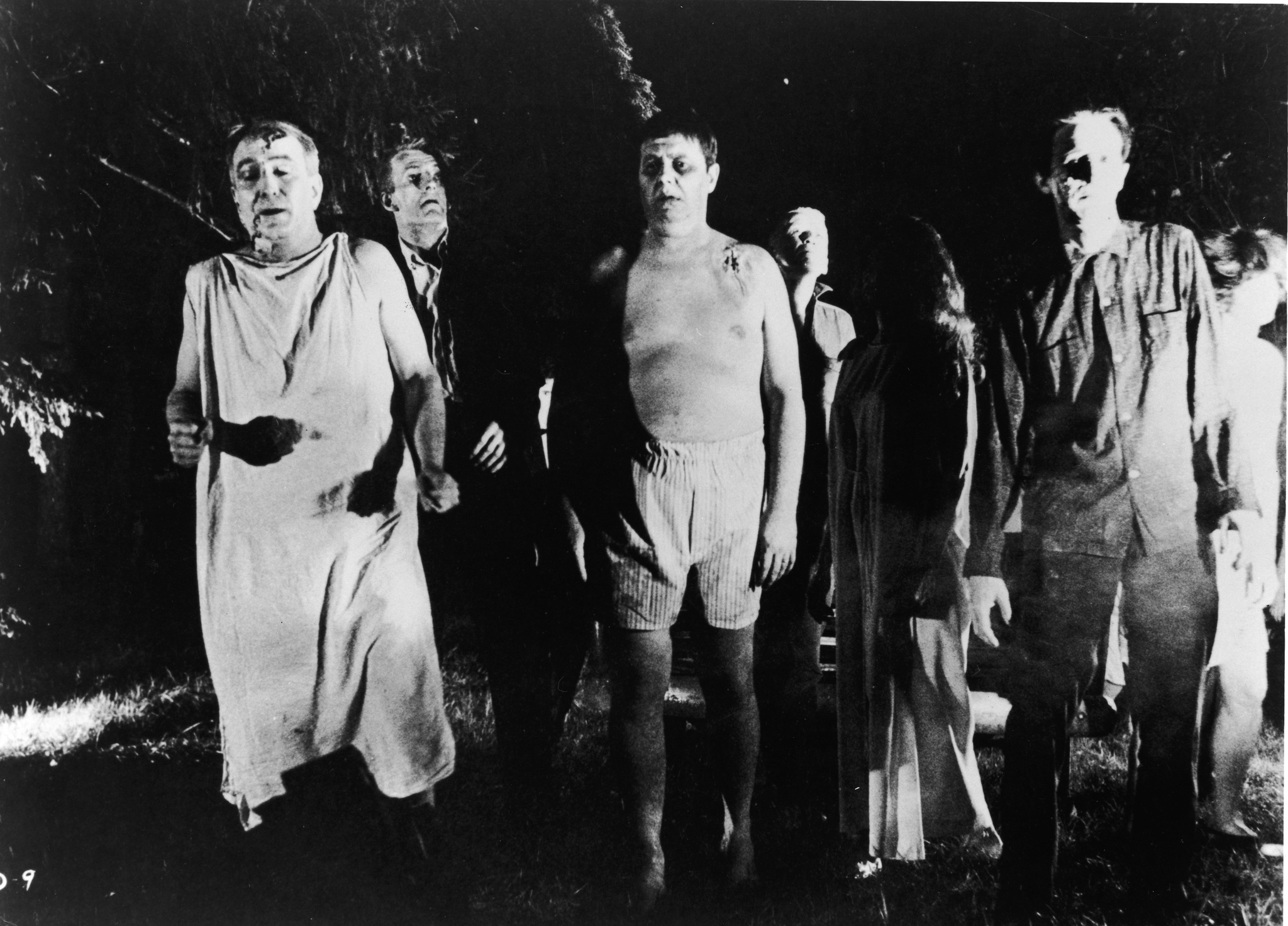
This film is the real gamechanger for zombie films, before Night of the Living Dead zombies were merely mindless humans under the control of some sinister voodoo priest, they were not the flesh eating monsters we all know and love today. Then along came George Romero and all of a sudden zombies were these terrifying monsters who posed a real threat despite being so slow moving, without this film there would probably be no Zombieland or The Walking Dead. Along with giving birth to what we now consider to be zombies, the film is also extremely culturally significant mainly due to the male lead being an African American man which was a brave move at the time, Duane Jones' performance has since become iconic. It also sparked this sense of nihilism linked with horror cinema in a way that by the time the film ends and the threat has been overcome, our heroes may not get the ending they hoped for. Night of the Living Dead truly helped to develop horror cinema, it gave us the modern zombie, it took many risks both in its casting and story and it definitely raised the bar for horror cinema. It is without a doubt the most significant horror film of the 20th century.

So those are the top ten horror films that I feel have really influenced the genre and helped to develop it into what it is today. Without these films things may have been entirely different, these films took risks, the people behind them took risks, they pushed the boundaries of cinema and in turn allowed future filmmakers to do the same. They are truly films that are culturally significant.


Tuesday, 5 April 2016

Thoughts on TWD Season 6


It's been nearly 6 years since the cult comic book series The Walking Dead was adapted to our small screens, and what a journey it's been. Since it first aired back in 2010 our group of survivors led by ex-sheriff Rick Grimes (Andrew Lincoln) have been through quite a lot, from the unstable Shane (Jon Bernthal) to The Governor (David Morrissey) to cannibals, and that's not even taking into account the hordes of surrounding zombies. Yes our protagonists have been through a lot since the dead began to walk, but as season five came to a close it looked as though things were finally looking up for them after taking up residence in the idyllic town of Alexandria. But all good things must come to an end as the gang were soon to learn in what was quite possibly one of the most exciting and action packed seasons of The Walking Dead in a long time. (Warning, the following post may contain spoilers).

Now I don't know about everyone else but for me, seasons 4 and 5 of The Walking Dead felt as though they were lacking something. They felt a bit uneven and at times quite boring, every week felt like a chore sitting down to watch the show, but thankfully that all changed this season. One of the main reasons for this, which may sound strange, was that this season felt a bit more humorous. Now of course, The Walking Dead is not at all supposed to be a comedy show, but the early seasons had a sense of humour every now and again to ease the tension. Glenn (Steven Yeun) was funny, Merle (Michael Rooker) was funny, but with Merle dead and Glenn losing that playful attitude from the early seasons the show was beginning to feel a little dry. This season however saw a change to that, mainly due to the characters of Abraham (Michael Cudlitz) and Eugene (Josh McDermitt) and their onscreen chemistry. They had been with the show since season 4 but I felt this season really gave them the opportunity to show off their full potential, be it through Eugene's random moments of stupidity or Abraham's classic one liners ('why are dangleberries brown?' being my personal favourite) , the two brought some life into a show about the dead.


Another thing that made this season so enjoyable was that it gave more personality to its characters. In the previous two seasons it felt as though some of the characters who used to be so enjoyable to watch had become boring shells of their former selves, but this season changed all of that. Rick was a risk taking leader again, Daryl (Norman Reedus) was as bad ass as ever (the rocket launcher scene in particular) and Carol's (Melissa McBride) development was a pleasure to watch in the early episodes at least. Along with bringing back the shows sense of humour and making the characters more exciting again, season 6 also was heavy on the action. The previous two seasons were a lot more focused on character driven episodes as opposed to action packed ones, which is fair enough, characters needed to develop and such. However this season managed to find the balance between character development and hardcore zombie action so that each episode had that solid story while also keeping you on the edge of your seat. Episodes such as No Way Out and Not Tomorrow Yet were particularly nailbiting. Yes The Walking Dead was finally becoming one of the most exciting shows on television again.

Of course, the whole season had been ultimately building up to the shows newest big bad, Negan (Jefferey Dean Morgan). Already gaining quite the reputation for his role in the comics, Negan had been subtly teased throughout season 6 due to the introduction of his sadistic gang of crazies known as The Saviours, as the season progressed he was teased even more explicitly and then the finale came. There was so much hype built up around this finale, the promise of Negan making an appearance was enough to get us fans excited but the knowledge that he would be killing off one of the protagonists left us dying with anxiety in the weeks building up to it. Yesterday I finally got to watch the eagerly anticipated finale and as I expected, they were saving the big bad until the end which was cool in my book. Suspense slowly built throughout the episode as the saviours stalked our heroes while day slowly turned to night, there was even an appearance by Stephen Ogg aka Trevor Philips from GTA V which I felt was an excellent addition. Then the last scene came, Negan made his debut and Jefferey Dean Morgan gave it socks, it was quite possibly the most captivating performance I've ever seen on the show. The tension slowly built in the episodes final minutes leaving us hanging from the edges of our seats in fear of who would meet the end of Negan's baseball bat, Lucille. To put a long story short, we still don't know who did.


As Negan is about to make his swing it switches to the POV of his victim who then receives quite the beating and before we can tell who the victim was the episode ends. What a shame. The season had been so good up until that point and myself and many others felt disappointed and a little bit betrayed that we were left pondering the identity of Negan's first victim. You see, something about The Walking Dead that I have recently noticed is that it is a show that is very cautious about taking risks. Shows like Game of Thrones have led us to expect the worst case scenarios, but The Walking Dead seems to be playing it quite safe in comparison. Not only in the finale, but that whole Glenn storyline earlier in the season. We were led to believe that Glenn had been eaten by walkers after falling off of a bin into a crowd of them, it was an emotional moment and for a second it looked as though the writers were starting to take more risks this season. However a couple of episodes later we find that Glenn was okay as he crawled under the bin to safety, like what?

In the early seasons beloved major characters died without any elaborate getaways or cliffhangers in the way, the likes of Dale (Jeffrey DeMunn), Lori (Sarah Wayne Callies) and even Hershel (Scott Wilson) met their untimely demise which really allowed the show to maintain its edge. Now it seems to prefer killing off the minor characters instead, from Doctor Denise (Merritt Wever) to those annoying little brats in the mid-season opening, the characters being killed are not ones that we've been given enough time to grow to like. I don't mean to sound like some sort of sadist but more major characters need to die in order for the show to maintain that edge. More risks need to be taken by the writers in order to keep things exciting, we don't fear for the likes of Rick or Daryl anymore because we know that the writers wouldn't risk killing off such popular characters. This notion was almost challenged many times, Glenn almost died, Daryl almost died in the penultimate episode, but deep down we knew they couldn't die, we knew that the writers couldn't take that risk. When season 7 finally does come around and Negan's victim is finally revealed it should be a big character, someone we've grown close to and care for and not a secondary one who still needs time to grow and develop. That will keep things exciting in future episodes, that will pose the question of who really is safe.

As a whole I think season 6 of The Walking Dead was one of my favourites since the first. It had a captivating story that only at times felt uneven, the characters felt like themselves again and the whole experience was suspenseful and gripping. It was nice to see the likes of Rick and Daryl being complete bad asses again, it was equally enjoyable seeing female characters like Michonne (Danai Gurira) and Maggie (Lauren Cohan) being just as strong as their male counterparts as well. Even the humour brought by characters like Abraham and Eugene felt refreshing. However, for season 7 to improve on this one the show needs to start taking more risks. The protagonists need more threat and less security so that we as an audience genuinely do fear for their lives, so that the line between who's safe and who isn't becomes more blurred. A big improvement on the previous two seasons but still flawed in some ways, season 6 of The Walking Dead has left us all in anticipation to say the least.


Friday, 1 April 2016

Vault of Doom- 'House of 1000 Corpses'


Hello again, I realise this post is a bit belated as I have been a bit busy lately and prioritised reviews over this but now the time has come for another installment in the vault of doom, this time with Rob Zombie's House of 1000 Corpses. The directorial debut from the rockstar turned director follows four teenagers (one of which is Rainn Wilson of the American version of The Office) who travel through the backroads of Texas in search of the burial site of local legend Doctor Satan, a sadistic doctor who experimented on his patients. However their journey soon becomes a lot more sinister when they come into the company of the Firefly family, a family of psychotic murderers with a penchant for the macabre. The film stars horror veterans Bill Moseley and Sid Haig along with Zombies wife Sheri Moon Zombie, Academy Award winner Karen Black also joins the fun along with Dennis Fimple in his final role before his death.


I first heard about this film when I was about 10 years old after reading a Bart Simpson comic that had been written by guest writers such as Alice Cooper, Gene Simmons and Zombie himself. Zombie's segment was a parody of the film entitled House of 1000 Donuts in which the Simpsons wind up in a similar scenario to the films protagonists. I remember Krusty taking up the role of Sid Haig's Captain Spaulding while Doctor Satan was Lard Lad with syringe fingers and a doctors outfit. As a 10 year old I had no idea what was going on but I was just like hey this is cool. A few years later I finally got around to watching the film one evening when I was home alone and then that Simpsons comic finally started to make sense.


Like a lot of Rob Zombies work, House of 1000 Corpses is a bit of an acquired taste. Not only because of the bizzare and graphic scenes of violence that may cause a few to feel sick but also because, well, it's not the best. Don't get me wrong however, I love this film a lot but I am aware of why people don't, I simply don't care. Yes there is some questionable writing and yes it is very style over substance (but it's stylish as hell so) but it has some great characters fueled by the brilliant performances of some of the cast. The highlight of the film for me was Bill Moseley's character Otis Driftwood, a member of the insane family who considers himself to be an artist of sorts. Moseley is fantastic as ever, giving the character so much life and personality allowing him to steal all of his scenes while spurting out some memorable quotes and torturing cheerleaders along the way. Standing out in a similar manner to Moseley in a much smaller role is Sid Haig as Captain Spaulding, a crude clown who owns what can only be described as a cross between a Texaco garage and Ripley's Believe it or Not. He too gives a brilliant performance in his limited screentime, stealing all of his scenes early on in the film as he takes the protagonists through his glorified ghost train.


It has its shocks, so beware of spoilers from here on out. One scene which I found particularly shocking was when one of the protagonists father, Don (Harrison Young) goes to the Firefly residence along with two deputies portrayed by the late Tom Towles and Walton 'cut my legs off and call me shorty' Goggins. What follows is a catharsis of gunshot and bloodshed set in slow motion to the tune of I Remember You by Slim Whitman. It was not the tortured cheerleaders or the surprise shootout that shocked me however, it was the scenes final moments where Otis stands over Don with a gun in hand as it slowly zooms out. For a moment it lingers on the shot we become unsure of what is about to happen while this subtle tension builds until Otis eventually shoots Don. For such a bizzare film this scene is a bit emotional as it cuts between the bloodshed and home video footage of Don and his daughter Denise (Erin Daniels). Other memorable moments for me include the the nightmarish murder ride, the 'fishboy' scene (fishboy can be seen below in all his glory) and the outlandish climax where Denise ventures into the subterranean lair of Doctor Satan and his mutant experiments. Crazy stuff.

Image result for house of 1000 corpses title card

The film gained a lot of criticism at the time even before it was released, being shelved initially by Universal Studios in fear of an NC-17 rating. When it was finally released by Lions Gate it was criticised for its gore and for being a bit sloppy and uneven, Zombie himself has even stated that he feels the film was a bit of a mess. Despite all of the negativity around this film it has gained a cult following by many (including myself) due to its unique style and performances by the likes of Moseley and Haig. Looking back on it now it is almost like a Tobe Hooper film with no involvement of Tobe Hooper, taking elements both stylistically and in story from films such as Eaten Alive and The Texas Chainsaw Massacre. Even the murder ride scene feels a bit like Hooper's film The Funhouse. However, House of 1000 Corpses takes these Hooperesque influences and blends them with Zombies own unique vision to make a film that is visually memorable despite having some heavy flaws. It has since spawned a grittier and much more polished sequel called The Devil's Rejects that has been praised by the likes of Stephen King himself and holds a similar cult status to its predecessor. Although it has its mistakes, House of 1000 Corpses is a film that hardcore genre fans will appreciate that will have you both laughing and gagging from start to finish.